
World of Anterra Review: Evidence Before Release
Read this World of Anterra review of the available evidence: official systems, trailer reactions, access limits, and what cannot yet support a verdict.
On this page
- What this review can honestly answer
- Exploration is the clearest statement of intent
- Combat needs more care than a genre shortcut
- Presentation includes more than the pixel-art label
- Characters and activities are announced systems
- Multiplayer listings are plans to investigate
- Why public reactions and ratings need context
- Hardware requirements are not a performance verdict
- What price and access contribute to a recommendation
- The useful conclusion before a hands-on review
What this review can honestly answer
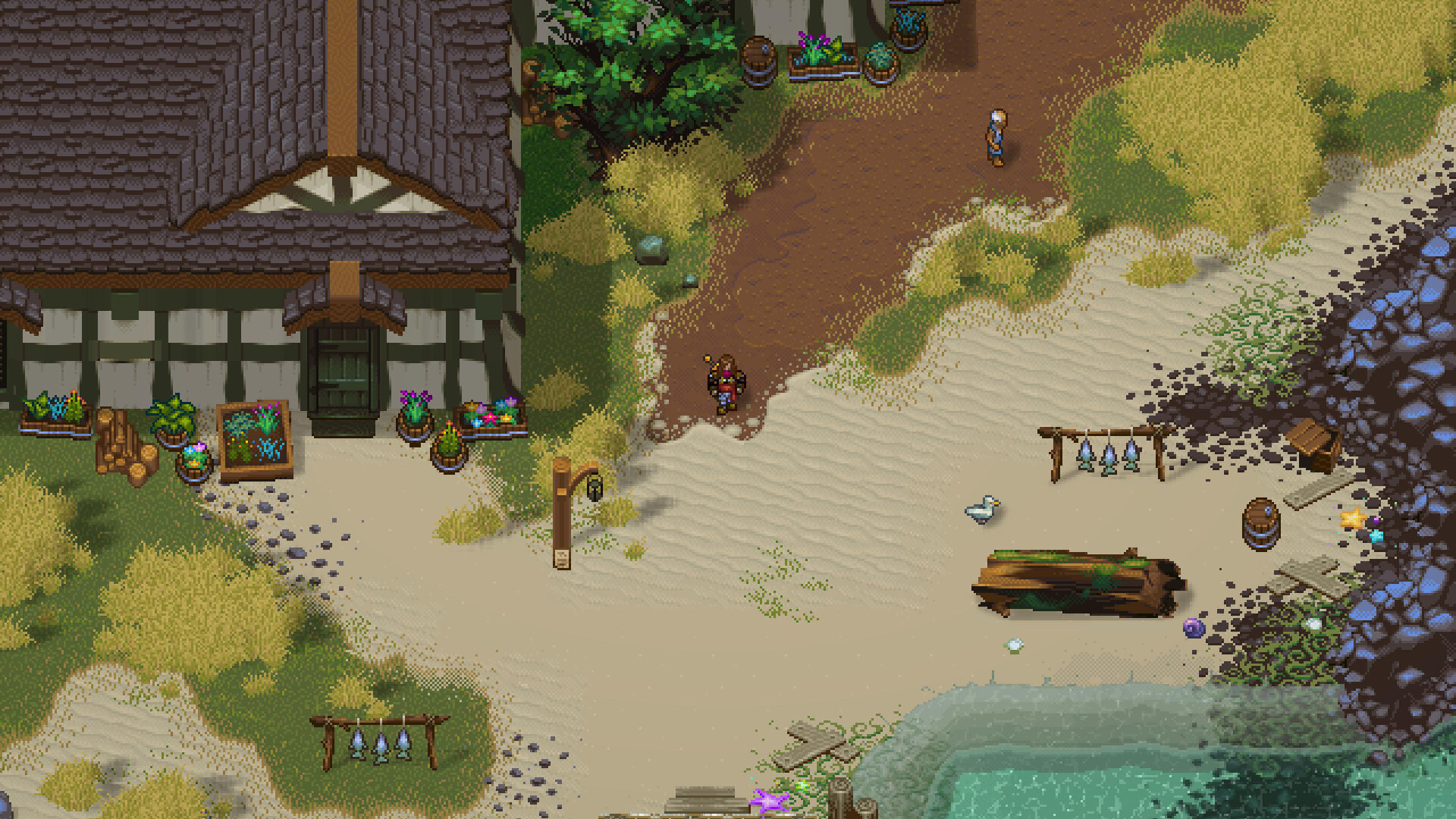
World of Anterra has a Steam page describing an open-world RPG, a planned 2026 release, and a collection of listed features. On October 28, 2026, the reviewed page does not offer the game for purchase or display user reviews. That makes an evidence-based preview possible, while a finished-game recommendation would require access and testing that this article does not claim.
The distinction matters when search results attach the word review to a trailer, a project page, or an early announcement. Each can tell you something about the game, but none automatically demonstrates the quality of an entire playable campaign. The following sections identify what official material describes, what viewers discuss, and which questions remain unanswered without treating speculation as experience.
Exploration is the clearest statement of intent
The official website describes a world containing oceans, continents, mountains, caves, and dungeons. Steam calls the world handcrafted and connects exploration with nonlinear quests, characters, books, and environmental storytelling. Those are specific design statements, although they do not establish a measured map size or a verified amount of playtime.
This makes curiosity and discovering context central to the announced experience. Containers, interiors, and hidden details are part of the Steam description, rather than evidence that every object can be manipulated or every building entered. How consistently these ideas support exploration across the complete game remains pending confirmation until a representative playable version can be assessed.
Combat needs more care than a genre shortcut
Steam describes combat as combining quick-time actions with grid-based strategy. The official website also discusses party combat, weaknesses, environmental advantages, and rare consumable items. Together these descriptions support a hybrid system involving tactical choices and active elements, rather than a confident claim that battles follow one familiar RPG's rules exactly.
Some community replies use simpler labels such as turn-based when responding to the trailer. Those impressions are not a substitute for the developer's more specific description, and they do not establish the exact timing rules or difficulty of an actual encounter. Balance, responsiveness, accessibility options, and the range of viable strategies remain pending confirmation without a tested build and documented settings.
Presentation includes more than the pixel-art label
The developer describes layered character animation, real-time lighting, water shaders, weather, and a day-and-night cycle on Steam. Its announcement feed provides additional explanations of water rendering, palette swapping, and shadow-offset maps for two-dimensional assets. These sources document the intended visual systems without supplying a benchmark or proving consistent performance on every device.
The pixel art is a recurring subject of interest in public trailer discussions. Personal enthusiasm for that style is useful context for audience expectations, but it cannot establish animation quality throughout an unfinished campaign or the readability of every interface. Resolution options, small-screen legibility, and performance under demanding effects remain questions for future hands-on evaluation.
Characters and activities are announced systems
The official website describes NPCs working, socializing, eating, and pursuing hobbies. It also describes typed dialogue questions and activities including camping, crafting, building, gathering, and fishing. These statements suggest several ways to interact with the world, without confirming unlimited conversation, unrestricted construction, or any particular count of recipes and professions.
An honest assessment should keep that boundary visible. The existence of a listed activity does not reveal how deep it is, how often it matters, or whether it creates repetitive work over a long playthrough. Quest variety, dialogue consistency, character development, and the relationship between optional activities and progression remain pending confirmation rather than grounds for invented praise or criticism.
Multiplayer listings are plans to investigate
Steam lists single-player, online co-op, shared or split-screen co-op, and cross-platform multiplayer among its features. The BackerKit FAQ describes multiplayer as building on the single-player experience. These are useful statements of intent, but they do not document a completed test session or identify every supported combination of devices.
Party limits, host progression, save transfer, connection stability, and the exact availability of these features at each release stage remain pending confirmation. A cross-platform label also does not independently confirm PlayStation, Xbox, or Nintendo hardware generations. Those questions need platform-specific documentation and testing before they can support a practical recommendation to a group planning to play together.
Why public reactions and ratings need context
The May 29 CRPG discussion and June 8 Games discussion contain interest in the visuals alongside questions about combat, interface design, ambition, and the development wait. Those threads capture reactions to public material, rather than a representative survey or a collection of verified full-game playthroughs. A highly visible opinion should therefore remain an attributed opinion.
The official itch.io page offers teaser art assets, including wallpapers and an avatar. A rating on that project page is not a review score for a released World of Anterra campaign, so it is excluded from any game verdict here. Historical Switch coverage and older launch expectations likewise provide context without settling the state of a future release.
Hardware requirements are not a performance verdict
Steam publishes minimum and recommended Windows configurations, including separate memory and graphics requirements. Those specifications give prospective PC players a reference point, but this article has not tested the game on those machines or measured how its dynamic water, lighting, and environmental systems behave under load. A statement that the art resembles an older console game would therefore be an inadequate basis for promising performance on inexpensive hardware or a future handheld edition.
The historical FAQ also mentions Mac and console platforms without documenting a tested current product for each. That means a general preview cannot responsibly imply equal performance, identical controls, or feature parity across every intended version. A meaningful platform review would need to identify the actual build and hardware, explain its settings and testing conditions, and distinguish a technical limitation from a feature that has not yet been announced for that edition.
What price and access contribute to a recommendation
Value depends partly on what a purchaser can obtain, making the current storefront status relevant to any review-like search. The reviewed Steam page does not show a retail price, while BackerKit lists named campaign offers that should not be substituted for an unannounced Steam price. An eventual recommendation needs the actual product and terms being assessed, rather than an assumed price chosen from a different channel or an older pledge description.
Access also sets the limits of an evaluation because a trailer cannot expose the same evidence as a complete playable build. A future backer demo might support observations about its particular scope, while still leaving the full story, progression, and long-term balance unresolved. Until that evidence is available and examined, the useful conclusion is a clearly bounded preview of announced systems, with untested quality and value judgments left as pending confirmation.
The useful conclusion before a hands-on review
The available material supports interest in a handcrafted RPG with exploration, tactical and active combat elements, character interactions, and environmental systems. It does not yet support a scored verdict about the complete game, a verified completion time, or a claim that the announced scope works equally well on every planned platform. Keeping those limits explicit is more useful than assigning a number to systems that have not been independently tested here.
For a purchasing decision, separate the current price information from the release plan and actual download availability. The FAQ's planned Early Access and preceding backer demo may eventually create opportunities for more specific evaluation, but access and dates must be confirmed for that version. A later hands-on review should identify its build, platform, settings, and testing conditions before changing any of the pending conclusions above.
Related pages
World of Anterra Crafting and Activities
Explore the confirmed non-combat activities available throughout Anterra. The developers have announced several systems designed to make exploration more interactive, including crafting, gathering, camping, building, and fishing.
World of Anterra Gameplay
Explore the major gameplay systems officially confirmed for World of Anterra. The game combines open-world exploration, nonlinear questing, party-based combat, interactive NPC dialogue, and sandbox-style activities.